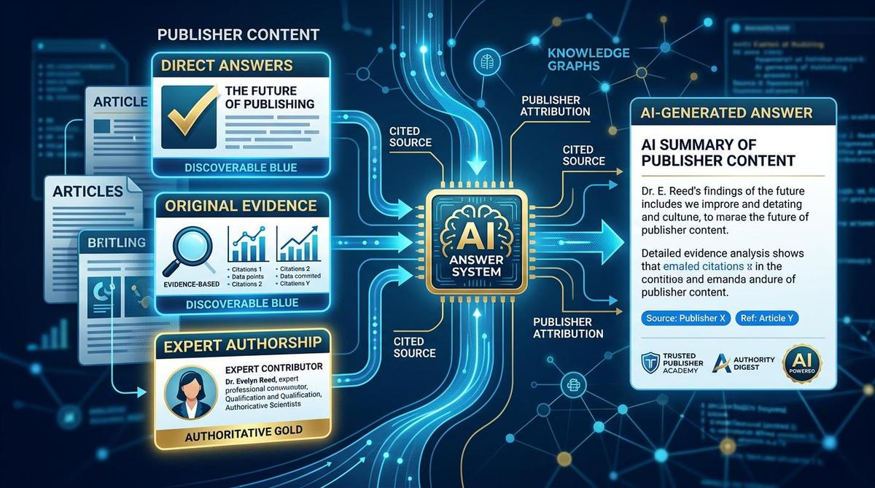
The shift from traditional search results to AI-generated conversational responses represents the most fundamental change in information discovery since the emergence of search engines themselves. For publishers, the critical question is no longer simply how to rank on page one, but how to become the source that AI systems cite, reference, and direct users toward when synthesizing answers. This new paradigm requires a complete rethinking of content strategy and technical optimization.
AI-powered search interfaces operate fundamentally differently than keyword-matching algorithms. Large language models synthesize information from training data and retrieved context to generate coherent responses, meaning publishers must optimize for being included in the retrieval process and recognized as authoritative sources. Traditional ranking signals like keyword density and backlink volume are supplemented by factors like entity recognition, content freshness, semantic relevance, and citation frequency across the web.
The concept of “citation SEO” is emerging as a critical discipline. Publishers need to understand how AI systems select which sources to mention, which to silently draw from without attribution, and which to ignore entirely. Content that is clearly structured, fact-dense, and published on domains with strong entity recognition is more likely to be explicitly cited. Original data, proprietary research, and expert quotes all increase citation probability because they provide unique value that AI systems want to reference rather than paraphrase.
Technical infrastructure matters enormously. Fast-loading pages with clean structured data, clear authorship markup, and robust semantic HTML help AI crawlers understand content context and authority. Publisher markup, including detailed author profiles, review policies, and editorial standards, signals to AI systems that content comes from a credible source worth citing. Investment in this technical foundation pays dividends as AI-driven search becomes the dominant discovery mechanism.
Patience and strategic persistence are essential because building AI visibility takes time. Publishers establishing new authority should understand realistic timelines for SEO impact in competitive markets. Insights from resources like https://karpittisztitasesszonyegtisztitas.blog.hu/2026/06/29/how_long_does_seo_take_in_nyc_a_realistic_12-month_timeline demonstrate that meaningful visibility improvements typically unfold across months rather than weeks, requiring sustained investment before compounding returns materialize.
The publishers who master this transition will treat AI-generated responses as a new distribution channel requiring specialized optimization. By producing uniquely valuable content, implementing robust technical infrastructure, and building recognized authority around specific topic areas, publishers can position themselves as indispensable sources that AI systems consistently surface to users seeking reliable information.
Key Takeaways: - Optimize for AI citation rather than just traditional keyword rankings - Produce original data and expert insights that AI systems want to reference - Implement structured data, authorship markup, and semantic HTML for AI crawlers - Build recognized entity authority around specific topic domains - Expect realistic timelines of months for meaningful visibility improvements in AI search
Resources: